
Kagoshima ramen: the Kyushu bowl that owes nothing to Kurume, with pickles and tea on the house
I have not been to every place in this guide. The figures below are taken from the sources listed at the end, with the date each one was published — not measured by me. Where I have been, the article says so.
Every other ramen in Kyushu can be traced, by someone’s account, back to a cauldron in Kurume. Kagoshima’s cannot. At the southern end of the island, the ramen is paler, softer and gentler than the rest, it comes with a dish of pickled radish and a small pot of tea that nobody charges you for, and the Ramen Museum records the local claim that it is the one Kyushu style that owes nothing to Kurume.
Where it came from
The museum’s Kagoshima page names the first shop as Noboruya, opened in 1947 by a woman named Michioka Tsuna, who had learned noodle-making in Yokohama; Komurasaki, the other founding name, followed in 1949. Both began within two years of Kurume’s white soup, but from a different source — Yokohama rather than the Chikugo river — which is the basis of the claim that Kagoshima developed on its own.
What makes it Kagoshima ramen
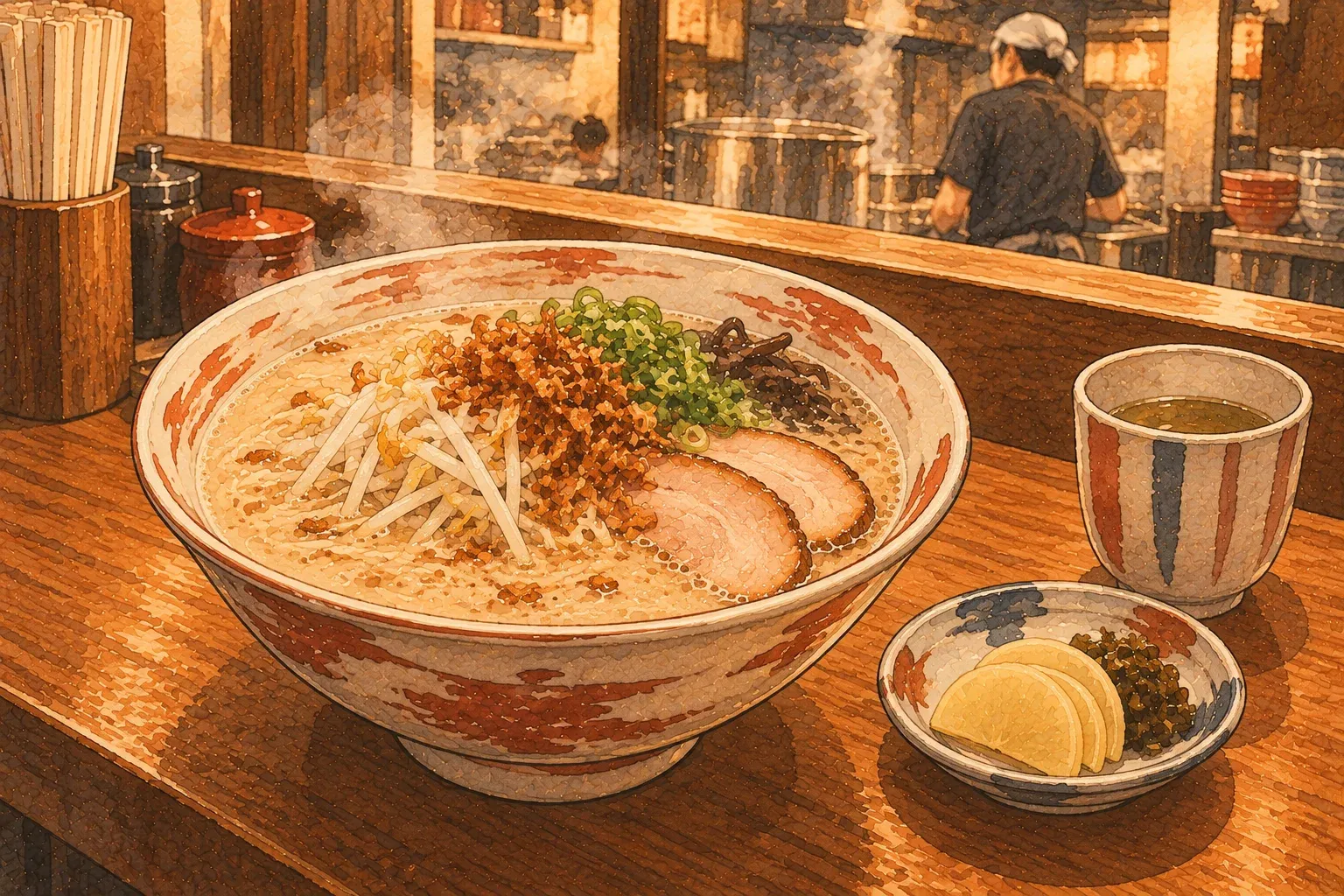
The soup. Pork bone is the base, but the museum says chicken carcasses and vegetables go in as well, and the result is “mild” rather than the thick, strong pork of Kurume.
The noodle. Soft, and whitish — made, the museum notes, without kansui, the alkaline water that gives most ramen noodles their yellow colour and spring. It is closer to a Chinese soup noodle than to anything else in Kyushu.
On top. Scorched spring onion (kogashi negi) is the distinctive addition, with pork and, at many shops, cabbage or bean sprouts.
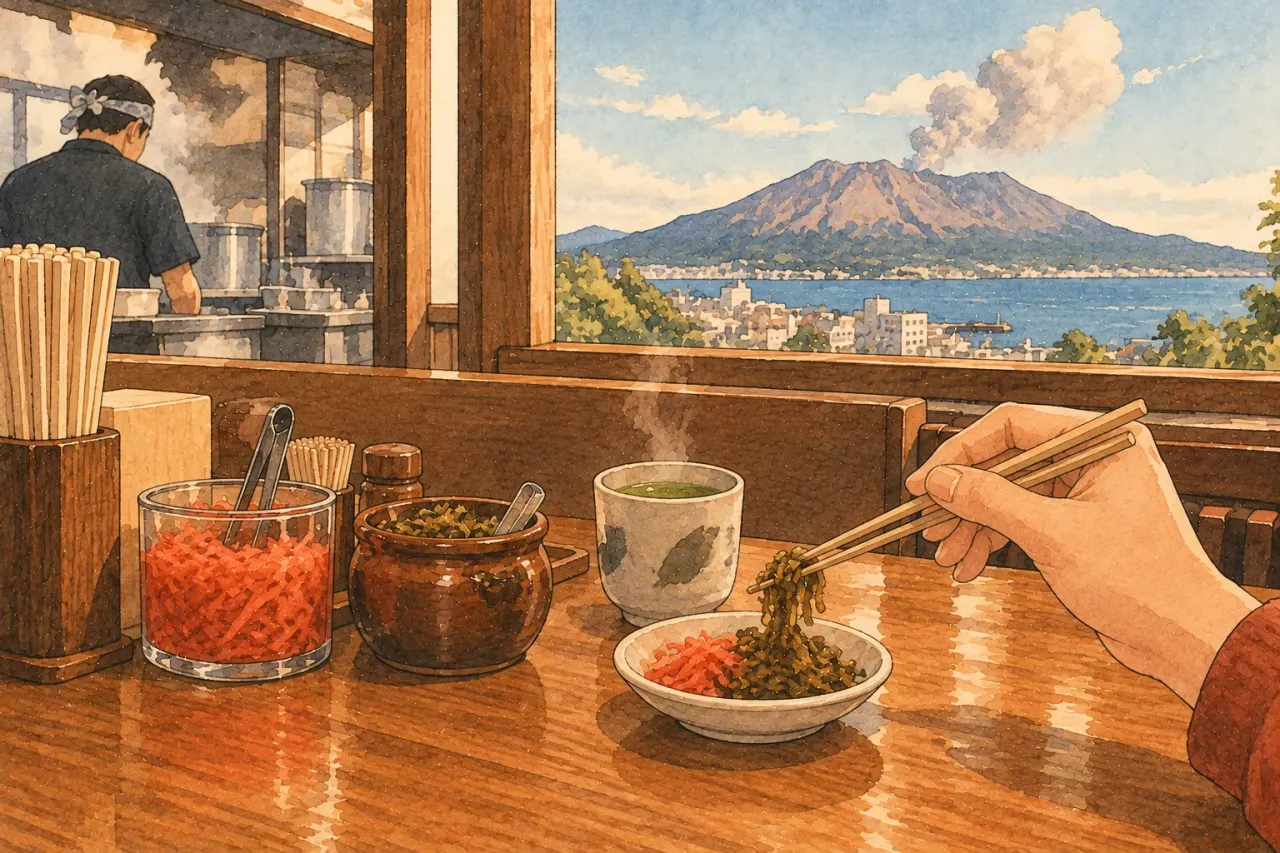
On the side. Pickled daikon, free and refillable at most shops, and a small teapot of tea. The museum lists both as standard.
Why Kagoshima
The founders learned in Yokohama, not Kurume, and the city at the far end of the island kept its own habits. Kagoshima is also pork country — the black-pig prefecture — which makes the gentleness of the soup more surprising, not less; this is a city that could have made the heaviest tonkotsu in Japan and chose not to.
The shops, and what they charge
Ramen ラーメン
- Survey
- ¥620 (≈ €3 / $4)中華そば(しょう油味)外食 1杯 · Aug 2026 · 特別区部
- Chains
- ¥420–¥748Plain soy-sauce ramen, one bowl · Hidakaya, Kourakuen, Gyoza no Ohsho · tax incl. · checked 2026-10-05
- Our guide figure
- ¥1,000 (≈ €6 / $6)From ¥800 for a plain bowl in Tokyo, about ¥1,000 once you add toppings · Oct 2026
Noboruya’s and Komurasaki’s current prices could not be confirmed from an official page, so none are given.
How to eat it
Eat the pickles between mouthfuls; drink the tea after. There is no refill and no hardness question, and the noodle is meant to be soft.
Kagoshima ramen away from Kagoshima
Komurasaki has shops outside the prefecture, but the style has travelled less than any other Kyushu ramen, partly because it does not fit the “Kyushu = tonkotsu” story that sells elsewhere. The pickles and tea are the first thing to go at a shop outside Kagoshima; if they are on the counter, the shop has been paying attention.
Getting there
Kagoshima-Chūō is the southern terminus of the Kyushu Shinkansen; the founding shops are in the city centre.
What people get wrong
- “Kyushu ramen is all one family.” Kagoshima is the exception the museum records.
- “Soft noodles are overcooked.” Here they are made without lye water, and soft is the design.
- “The pickles are a side order.” They are free, and they are part of the bowl.
Questions people ask
Is Kagoshima ramen tonkotsu?
Pork bone is the main stock, but chicken and vegetables go in too and the result is milder than Hakata or Kurume. The Ramen Museum records the view that Kagoshima is the one Kyushu style not influenced by Kurume at all.
Why do I get pickles and tea?
Because that is how Kagoshima serves ramen. The museum notes that most shops put out pickled daikon to eat freely and a small teapot of tea.
Sources
Prices are in Japanese yen. Conversions are approximate, at ¥177.30 to the euro and ¥158.23 to the US dollar as of 20 Oct 2026. Rates come from the European Central Bank, which publishes on working days only. Prices checked Oct 2026. What food costs in Japan →