
Hiyashi chūka: Japan’s chilled ramen, and the two restaurants that claim it
I have not been to every place in this guide. The figures below are taken from the sources listed at the end, with the date each one was published — not measured by me. Where I have been, the article says so.
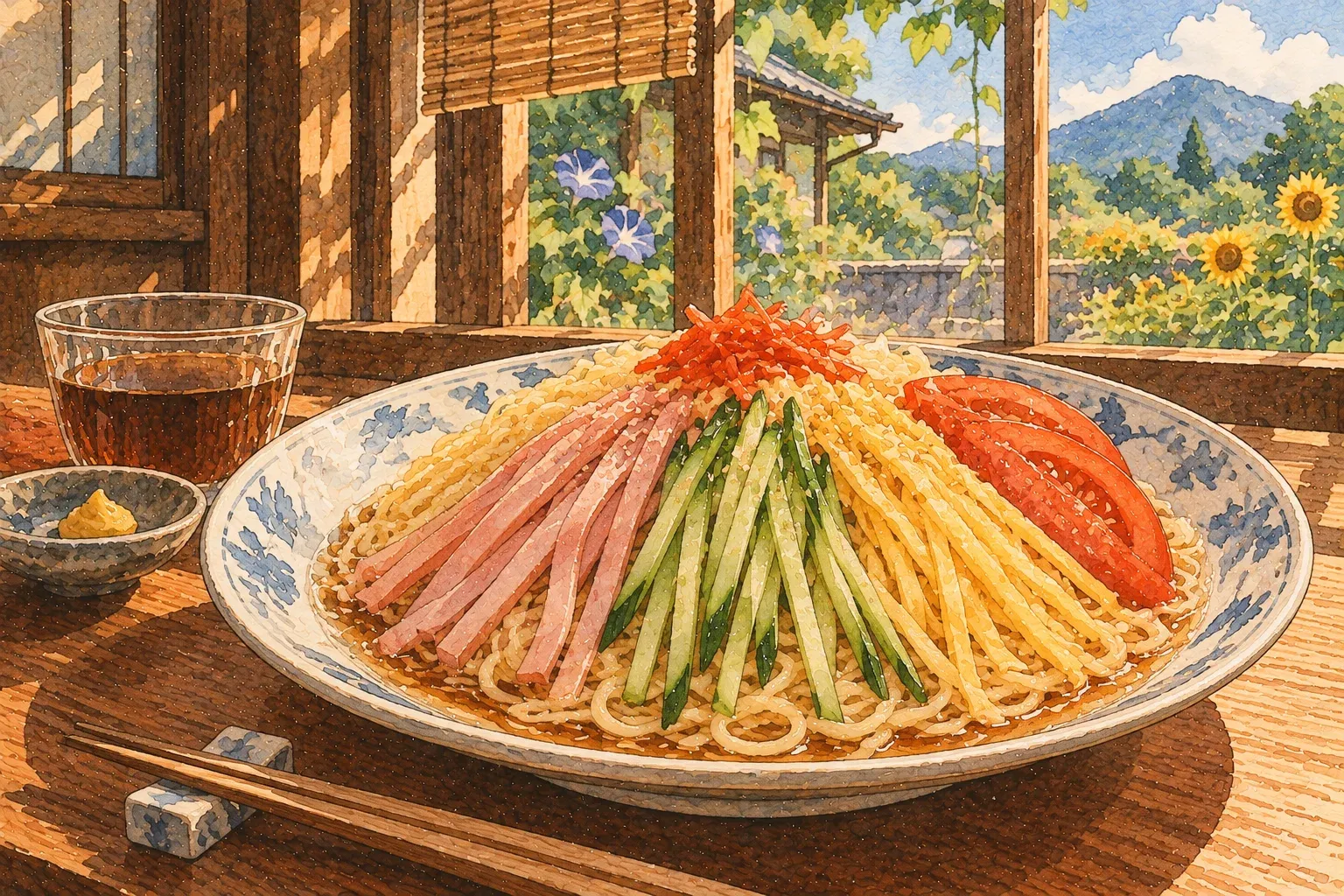
Hiyashi chūka — “chilled Chinese” — is Chinese-style noodles served cold with toppings, and it is a summer dish. Its history is short and disputed: two restaurants, one in Sendai and one in Tokyo, are linked to its birth in the 1930s. This page sets out what each says, and what I could not confirm.
For ramen in general, start from the ramen overview.
Where it came from
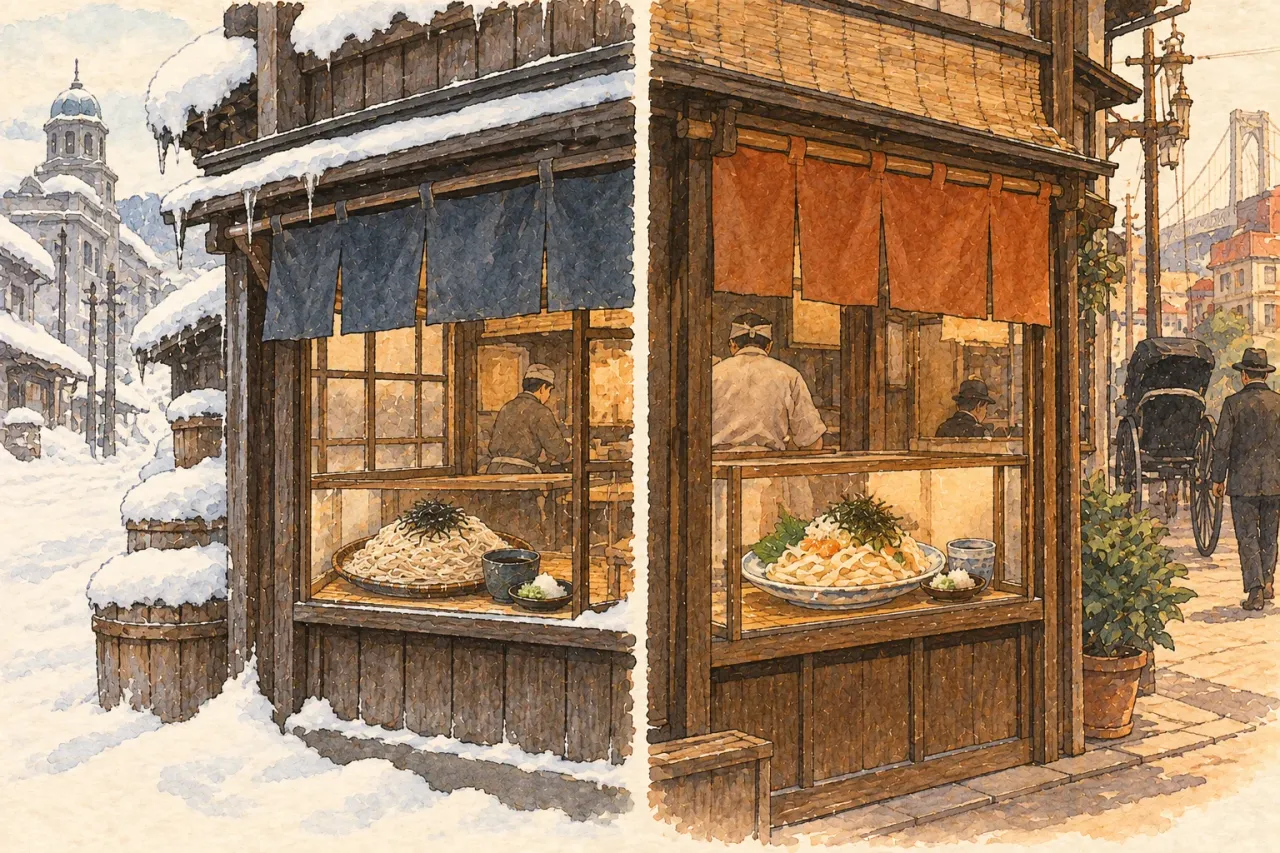
Sendai: Ryūtei, 1937. A page supervised by the Chinese restaurant Ryūtei says its founder devised ryanbanmen (涼拌麺) so that people could eat comfortably in the heat, and that this was the beginning of today’s hiyashi chūka. A travel magazine, Rurubu & more, adds the shop’s story: without air conditioning, customers stayed away from Chinese restaurants in summer, so the first owner gathered members of the Sendai Chinese restaurant association to show them the dish. The fourth owner says that in 1937 noodles were not chilled under running water in China, so it is a dish born in Japan. I have not seen the association’s own records, so this is the shop’s tradition.
Tokyo: Yōsukō Saikan. This Shanghai restaurant in Jinbōchō was founded in 1906, and the Chiyoda ward tourism association describes it as known for its gosiki ryanbanmen, a five-colour cold noodle that shows Mount Fuji through the four seasons. The tourism association’s page does not say when the dish began or claim it as the origin. A 1933 date and its inspiration from Shanghai appear only in sources I could not verify.
So: two restaurants associated with cold Chinese-style noodles in the 1930s. Which came first, I cannot say, and this site does not choose.
What it is
Chilled noodles with toppings. Ryūtei still serves it under the name ryanbanmen; Yōsukō Saikan’s five-colour version is its signature.
When it is eaten
In summer — the reason, in Ryūtei’s story, that it was invented. I could not confirm the origin of the familiar shop sign “hiyashi chūka hajimemashita” (“we’ve started hiyashi chūka”), its status as a seasonal word in poetry, or a Hiyashi Chūka Day, so none is given.
What it costs
Ramen ラーメン
- Survey
- ¥620 (≈ €3 / $4)中華そば(しょう油味)外食 1杯 · Aug 2026 · 特別区部
- Chains
- ¥420–¥748Plain soy-sauce ramen, one bowl · Hidakaya, Kourakuen, Gyoza no Ohsho · tax incl. · checked 2026-10-05
- Our guide figure
- ¥1,000 (≈ €6 / $6)From ¥800 for a plain bowl in Tokyo, about ¥1,000 once you add toppings · Oct 2026
Those are ramen prices from the price reference page. I found no verified tax-included price for hiyashi chūka at either restaurant.
Away from home
Both restaurants still serve their versions under their own names. No official source compares them or ranks them.
What people get wrong
- “It is a Chinese dish.” Ryūtei’s owner says it was born in Japan.
- “It has one birthplace.” Sendai and Tokyo are both linked to it.
- “Everyone agrees on the date.” Only Ryūtei’s 1937 is on a page I could check.
Questions people ask
Where was hiyashi chūka invented?
Two restaurants are linked to it. Ryūtei in Sendai says its founder created "ryanbanmen" in 1937, as a dish that was easy to eat in the heat. Yōsukō Saikan in Tokyo's Jinbōchō, founded in 1906, is known for its five-colour cold noodles. This site does not choose.
Is hiyashi chūka Chinese?
Ryūtei's fourth owner says that in 1937 noodles were not chilled under running water in China, so it is a dish born in Japan. That is the shop's account.
Is there an official Hiyashi Chūka Day?
I could not confirm who set one, so this page does not give a date.
Sources
Prices are in Japanese yen. Conversions are approximate, at ¥177.30 to the euro and ¥158.23 to the US dollar as of 20 Oct 2026. Rates come from the European Central Bank, which publishes on working days only. Prices checked Oct 2026. What food costs in Japan →