
Hōtō: Yamanashi’s flat noodle simmered raw in miso, and why wheat beat rice there
I have not been to every place in this guide. The figures below are taken from the sources listed at the end, with the date each one was published — not measured by me. Where I have been, the article says so.
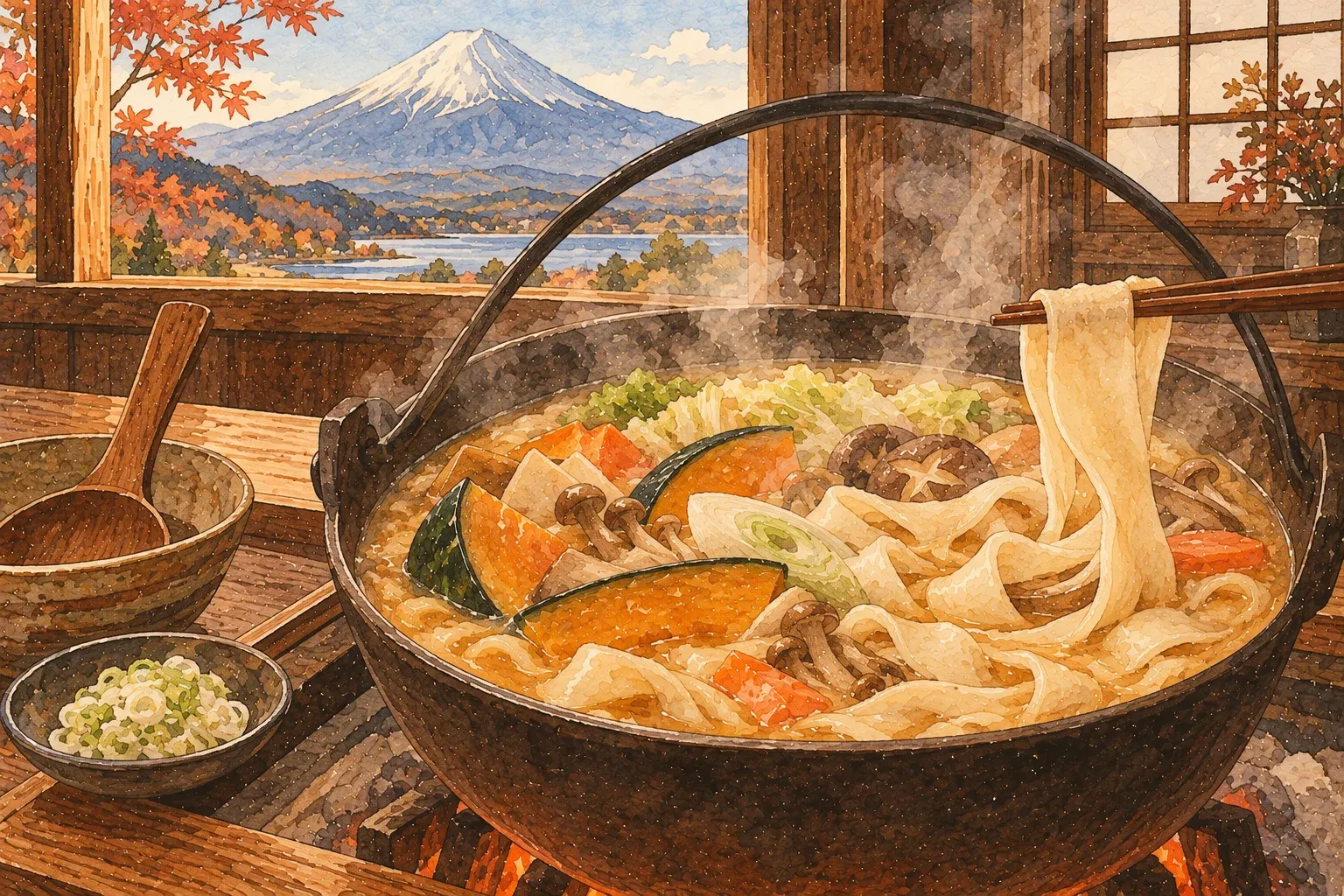
Hōtō looks like a thick, flat udon in a pot of vegetable stew, and in a sense it is. The difference is in how the noodle is treated: it goes into the pot raw and unrested, and its flour thickens the miso broth. It is Yamanashi’s dish, and the farm ministry’s explanation of why is a lesson in what land will grow.
For udon in general, start from the udon overview.
What it is
The farm ministry’s food guide: wheat flour kneaded with lukewarm water, rolled and cut into wide flat noodles, simmered with seasonal vegetables and meat in a miso broth with dried-sardine stock. At home it is made in a big pot; in restaurants it comes in an iron pot, one per person. Pumpkin is common, and the flour on the noodles gives the broth body.
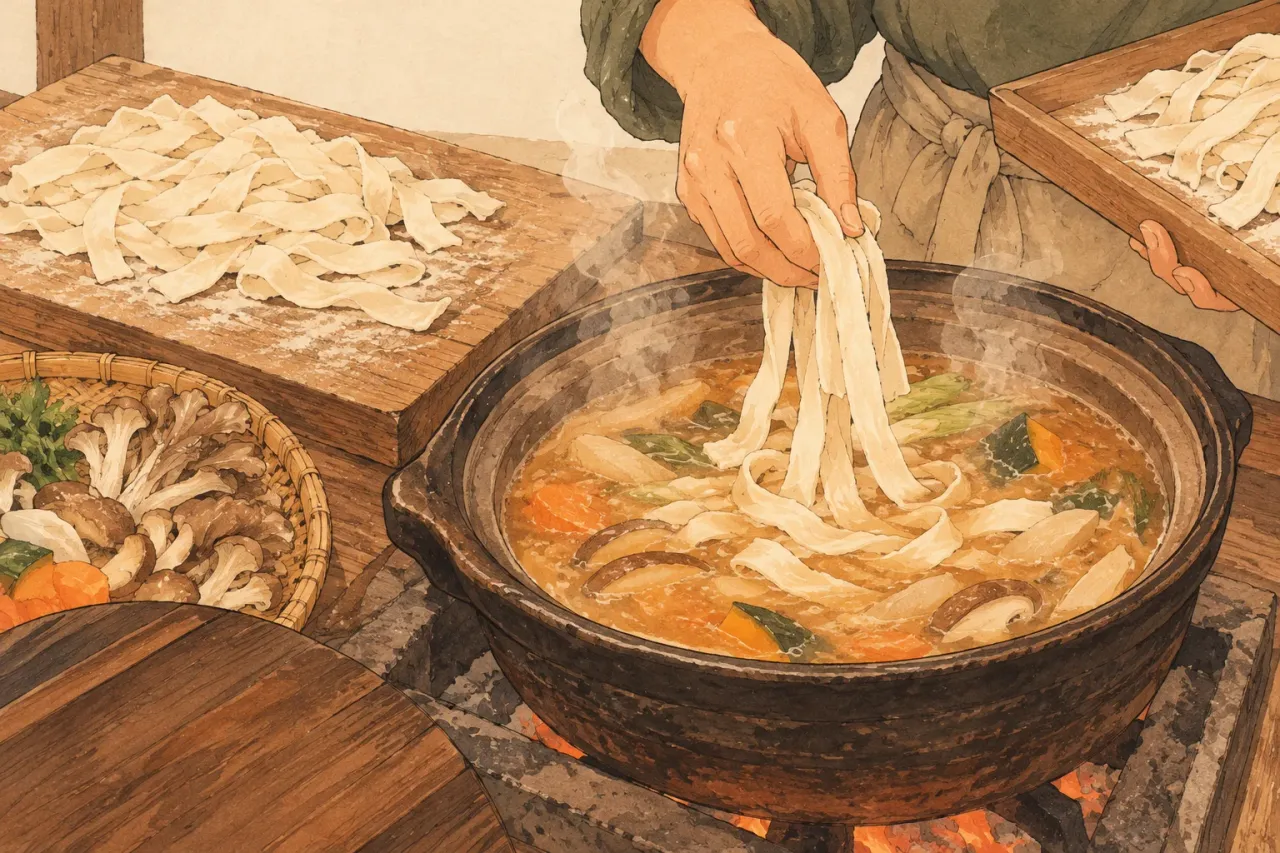
How it differs from udon. The ministry’s children’s guide says the noodles are not rested after making and are simmered raw in miso, giving a mellow taste.
Why Yamanashi
The ministry gives the history in steps:
- A dish written as hakutaku appears in the Heian period and is thought to have come from China.
- It was once eaten all over Japan, but as rice farming spread it remained mainly in Yamanashi.
- Yamanashi’s mountainous, volcanic land suited wheat better than rice, so it became a staple.
- Its popularity in Yamanashi can be confirmed in records from the Edo period on.
The Takeda Shingen story
Two name stories are told: that it was the field food of the warlord Takeda Shingen, and that the name comes from hōtō, “treasured sword”, used to cut the ingredients. The ministry’s food guide says the legend that Shingen devised it cannot be confirmed in records.
There is also a saying: umai mon da yo, kabocha no hōtō — “pumpkin hōtō is the good stuff”.
When it is eaten
The ministry gives no particular season; it is simmered with whatever vegetables are in season.
Not all of Japan’s flat noodles are this
Aichi’s kishimen is a flat udon in a strong soy broth, eaten hot or cold. See the kishimen page.
Hōtō away from Yamanashi
No official source compares hōtō in Yamanashi with hōtō elsewhere. The one difference the ministry records is within Yamanashi: a big pot at home, an iron pot per person at a restaurant.
What people get wrong
- “Hōtō is udon in miso.” The noodle is not rested and goes in raw, which changes the dish.
- “Takeda Shingen invented it.” The records do not show that.
- “It was always only Yamanashi’s.” The ministry says it was once eaten widely.
Questions people ask
How is hōtō different from udon?
The farm ministry says hōtō noodles are not rested after making, and are simmered raw in miso, which gives a mellow taste. Flour on the noodles thickens the broth.
Did Takeda Shingen invent hōtō?
There is a story that it was his field food, and one that the name comes from a treasured sword used to cut the ingredients. The farm ministry's food guide says the claim that he devised it cannot be confirmed in records.
Why is hōtō from Yamanashi?
The farm ministry says a similar noodle was eaten across Japan, but as rice farming spread it survived mainly in Yamanashi, whose mountainous volcanic land suited wheat better than rice.
Sources
Prices are in Japanese yen. Conversions are approximate, at ¥177.30 to the euro and ¥158.23 to the US dollar as of 20 Oct 2026. Rates come from the European Central Bank, which publishes on working days only. Prices checked Oct 2026. What food costs in Japan →