
Dagojiru and dangojiru: Kyushu’s flour-dumpling soups, Kumamoto’s five kinds and Ōita’s
I have not been to every place in this guide. The figures below are taken from the sources listed at the end, with the date each one was published — not measured by me. Where I have been, the article says so.
In Kumamoto and Ōita the flour goes into the soup not as noodles but as dumplings — torn, stretched, or wrapped round sweet potato. Dagojiru (Kumamoto) and dangojiru (Ōita) are home food, and the farm ministry says every household makes them differently. This page sits with udon because it is wheat dough in broth; it is really a family of soups.
For udon in general, start from the udon overview.
What it is
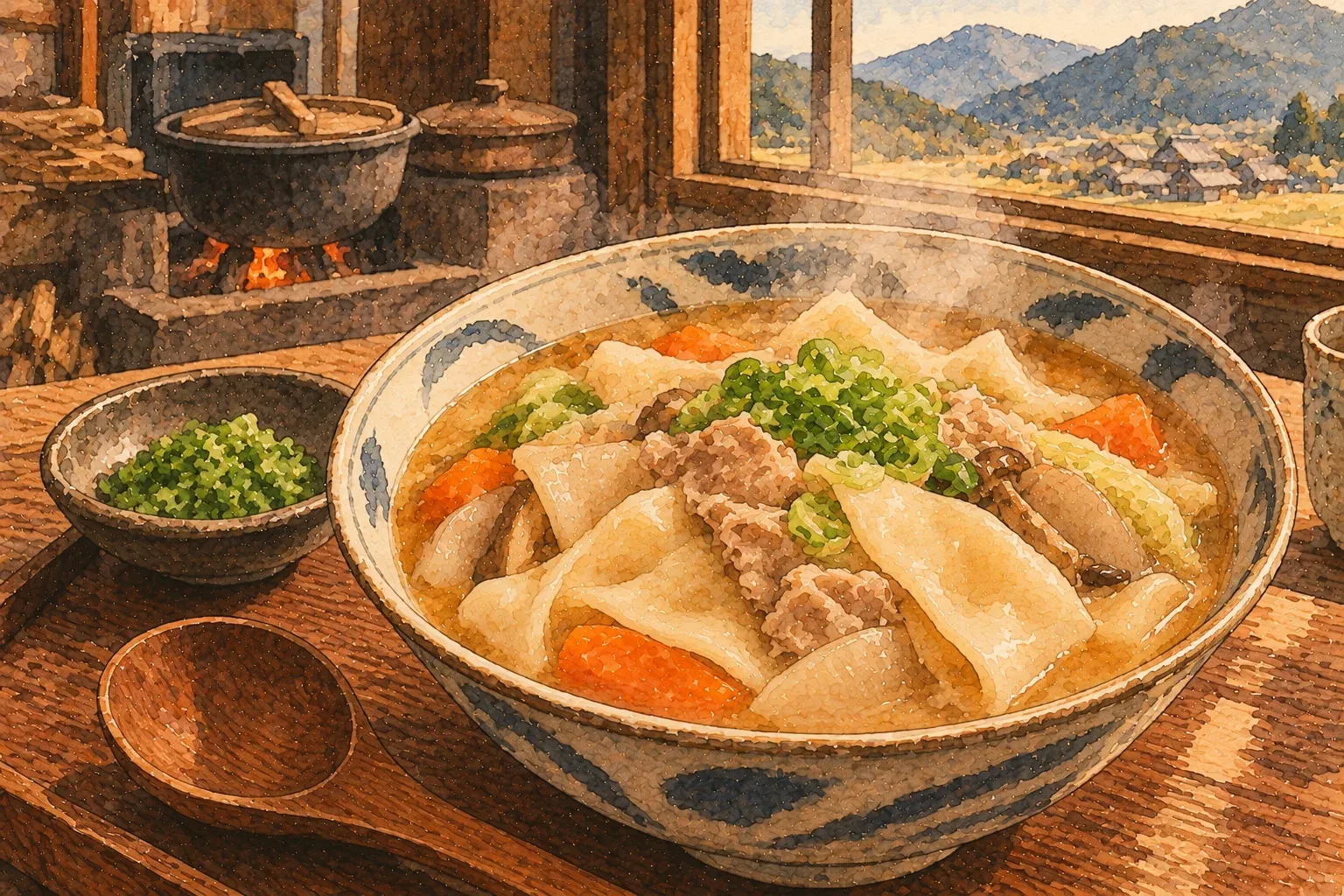
Kumamoto. The farm ministry: dago means dumpling; dagojiru is flour dumplings simmered with vegetables from the field — burdock, radish, carrot — seasoned with miso or soy. It is one of the local dishes that used other grains in place of rice. Ingredients and seasoning differ by area and household; it is a “mother’s taste”.
Ōita. The ministry calls dangojiru Ōita’s representative local dish: flour dough kneaded and stretched into strips, simmered with seasonal vegetables in a miso broth — barley miso — and long everyday food across the prefecture.
Kumamoto’s five kinds
The ministry lists them:
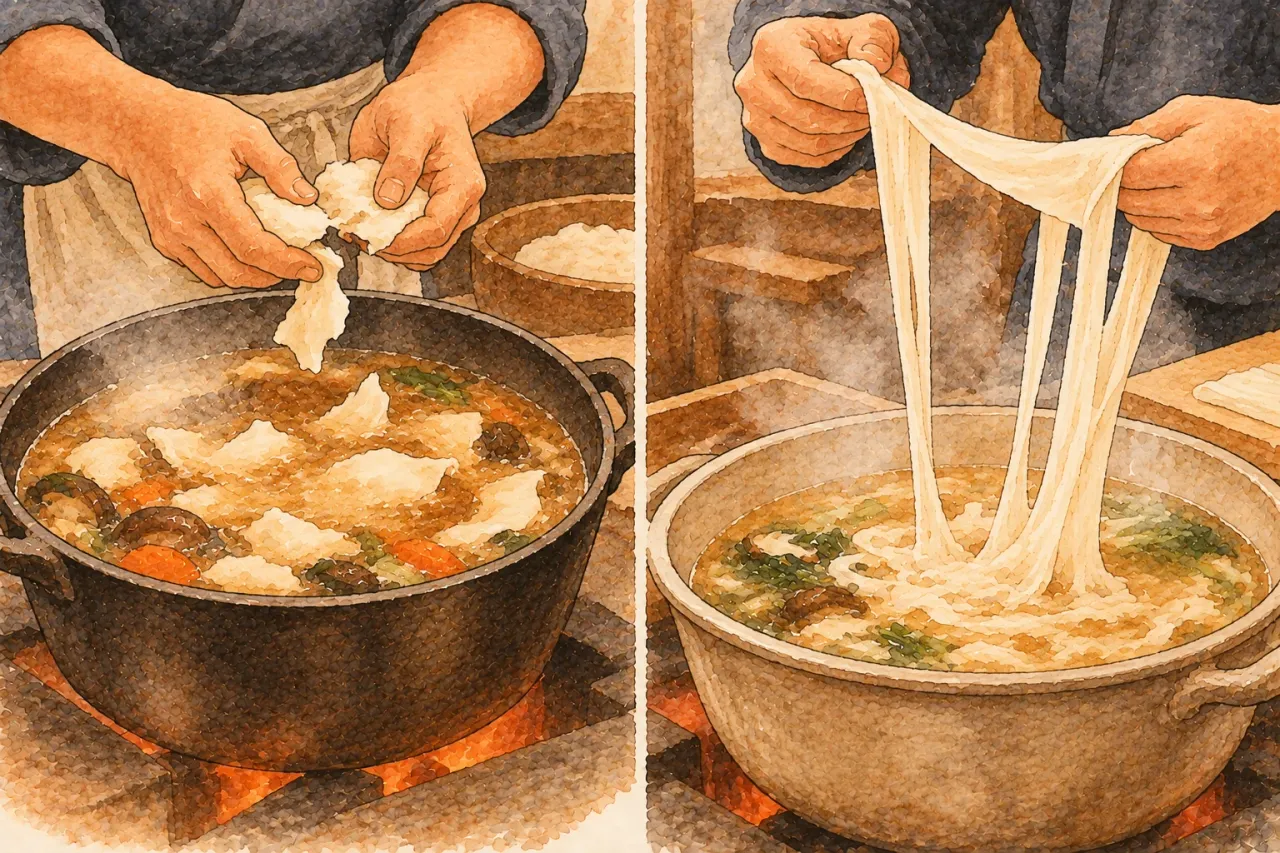
- Tsukkiri-dago — the standard: the dough torn off as it is stretched.
- Nobe-dago (Aso) — flat, long and noodle-like, made with rice flour because little wheat is grown there.
- Ikinari dagojiru (around Kumamoto city) — sweet potato wrapped in flour dough.
- Ohimesama dagojiru (Kikuchi and Kamoto).
- Sen-dago-jiru (Amakusa) — made with grated potato, said to have begun when the missionary Father Ferrié fed it to children at an orphanage in Kawaura.
Why it is eaten
Another ministry page says it is quick, nutritious and filling, so it has long been eaten between farm work. It is eaten across Kyushu, but in Kumamoto many areas use sweet potato. Route 57 is nicknamed the “dagojiru road”.
When. One ministry page quotes Kumamoto people saying it is on the table all year; another says it is eaten especially in autumn and winter, when taro and burdock are harvested. Both are given here.
Away from Kyushu
No official source compares these soups at home and elsewhere. What the ministry stresses is variation within the region: by area, by household.
What people get wrong
- “Dagojiru is noodle soup.” Mostly dumplings; only Aso’s nobe-dago is noodle-like.
- “Kumamoto’s and Ōita’s are the same dish.” The ministry treats them separately.
- “There is one recipe.” Kumamoto alone has five named kinds.
Questions people ask
What is dagojiru?
The farm ministry describes it as a Kumamoto soup of flour dumplings simmered with vegetables such as burdock, radish and carrot, seasoned with miso or soy. Dago means dumpling. It began as a way to stretch grain in place of rice.
Is Ōita's dangojiru the same?
The farm ministry presents them separately. Ōita's is flour dough stretched into strips and simmered with seasonal vegetables in barley-miso broth.
When is dagojiru eaten?
The ministry gives two emphases. One page quotes Kumamoto people saying it is on the table all year. Another says it is eaten especially in autumn and winter, when taro and burdock are harvested.
Sources
Prices are in Japanese yen. Conversions are approximate, at ¥177.30 to the euro and ¥158.23 to the US dollar as of 20 Oct 2026. Rates come from the European Central Bank, which publishes on working days only. Prices checked Oct 2026. What food costs in Japan →