
Festival stalls: what the rules let a roten sell, who the tekiya are, and why takoyaki fits
I have not been to every place in this guide. The figures below are taken from the sources listed at the end, with the date each one was published — not measured by me. Where I have been, the article says so.
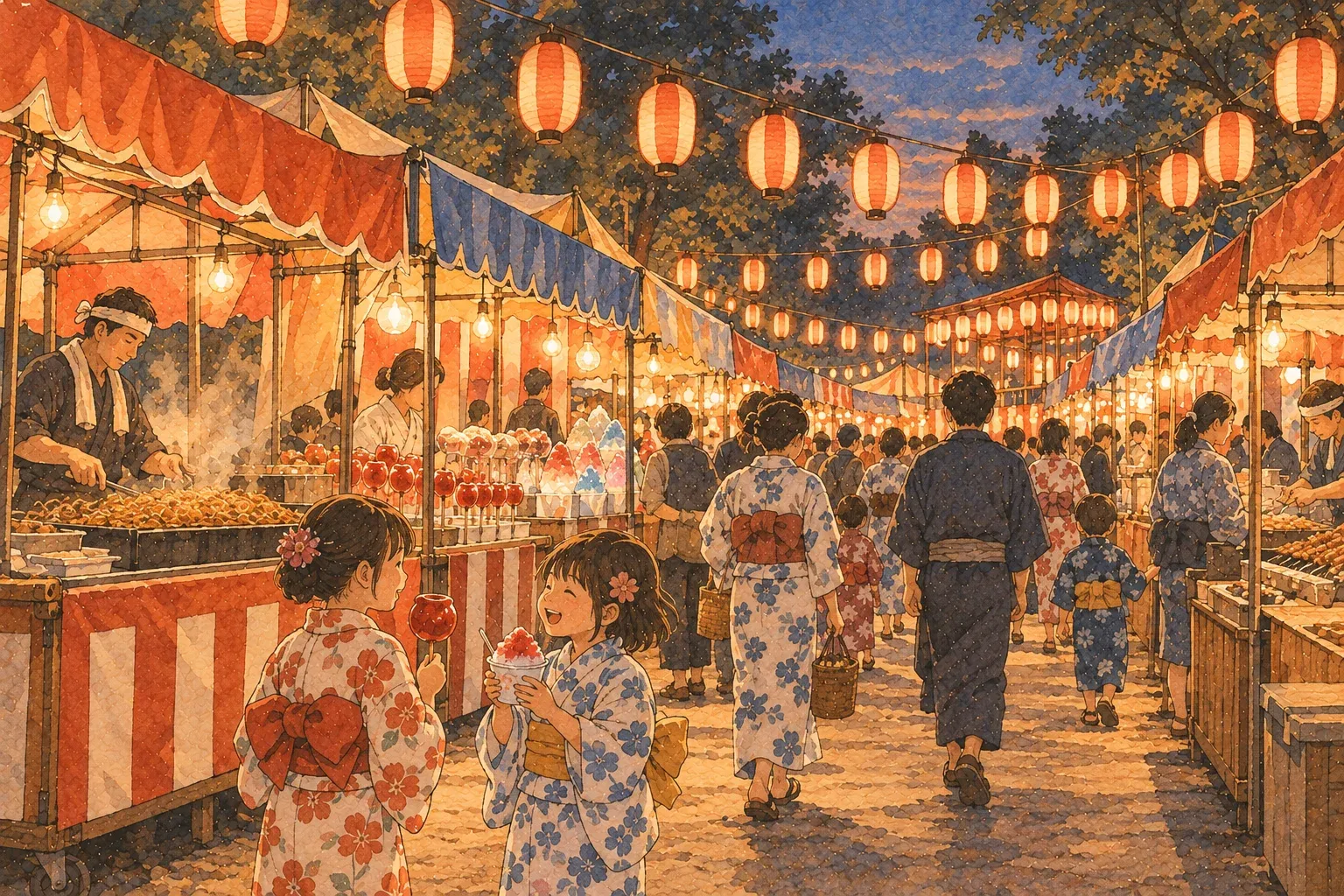
At a Japanese festival the food comes from stalls: takoyaki, fried chicken, oden, shaved ice. Those stalls are assembled for the day, licensed for food and for the road, and — at least in Osaka — limited by rule to the kind of food that can be cooked simply and heated just before serving. That rule goes a long way to explaining the menu. This page covers the rules, the temporary-stall exception, and the traders.
For food stalls in general, start from the yatai overview.
What a festival stall is
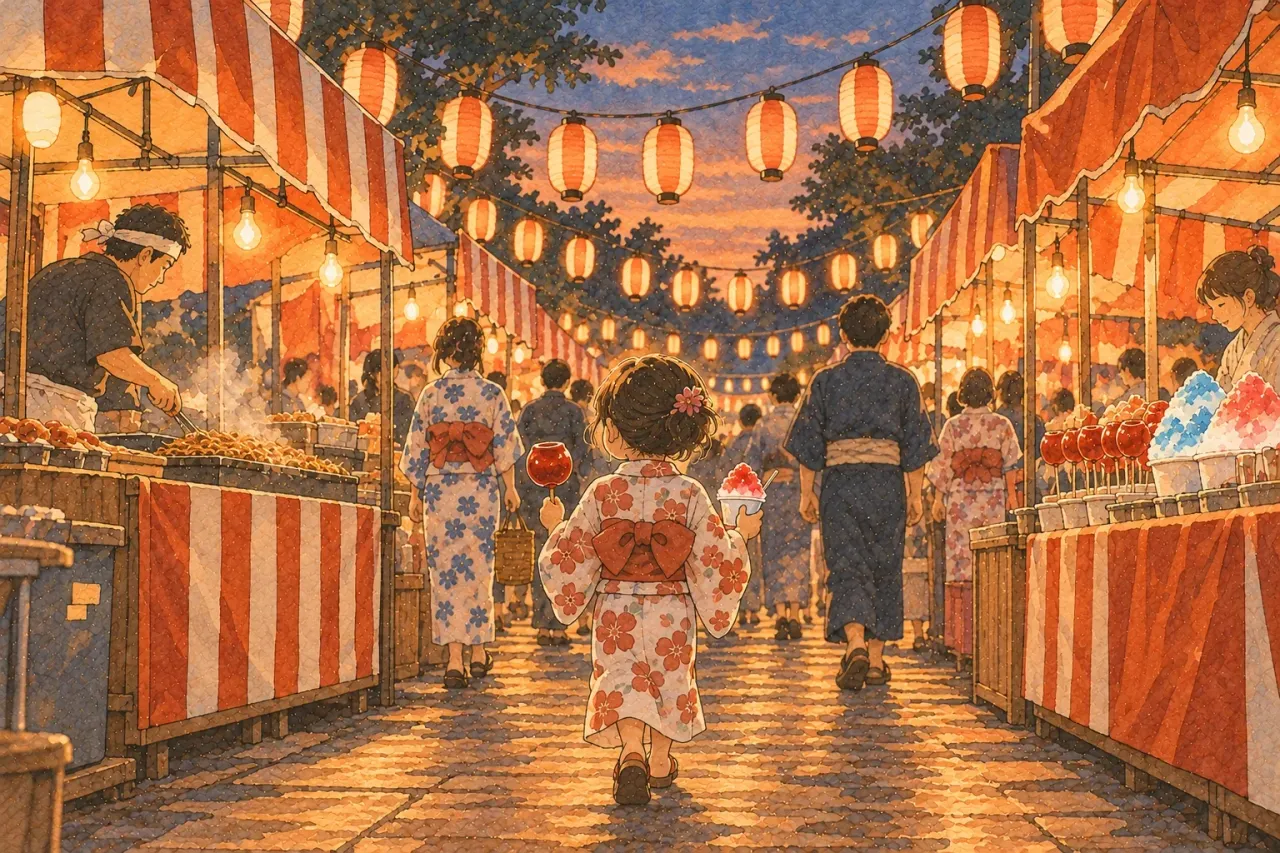
Osaka city describes a roten as a stall assembled each time it trades — unlike Fukuoka’s yatai, which set up at a fixed place every night.
The rules
- Food permit. In Osaka, a stall that cooks and serves food needs a restaurant business permit (the category since 1 June 2021). A permit from Osaka prefecture since then is valid across the prefecture. HACCP-style hygiene and a food hygiene supervisor are required.
- What it may sell (Osaka). In principle, food simple to prepare on site and heated just before serving: oden, takoyaki, fried chicken, shūmai. Exceptions: shaved ice, warabi-mochi, preparing drinks. Not allowed: raw food such as sashimi and salad, cutting after cooking, and first-stage preparation such as chopping vegetables or cleaning fish on site. Other cities may differ, and I could not confirm the rules for yakisoba, candied apples or candy floss specifically.
- Road. A stall set up on a road without moving needs a police road-use permit (category 3), and sometimes a road-occupancy permit too.
- The local-festival exception (Osaka). A festival run by a neighbourhood association, children’s group or school, held temporarily (in principle up to about five times a year), not mainly for profit, with stalls run by the organiser or people it chooses, can file a temporary-stall notice with the health centre and receive hygiene guidance instead of a permit. Food and equipment follow the stall rules. Trading as a business needs a permit.
So the takoyaki and fried chicken at a festival are not only tradition: they are the kind of food the rules allow a stall to sell. Takoyaki itself, the farm ministry says, grew out of snacks sold at sweet shops and festival stalls in the late Meiji and Taishō eras.
Who runs them
A reference answer from the National Diet Library sets out the two words:
- Yashi (香具師) and tekiya (的屋) both mean stall traders and their associations. Yashi is the older word; tekiya became common from the Meiji era. One source traces the shift to an 1872 Tokyo order abolishing the name yashi.
- Most stallholders were small travelling traders. To manage dealings with local people and friction with other traders on the road, they needed organisation, and regional tekiya groups formed.
- Yashi tended to mean an individual and tekiya a group (ikka), and yashi was more used in rural areas, tekiya in cities.
I found no official account of today’s tekiya organisations, or of how pitch fees work.
Older than festivals
Street-stall food is far older than modern festivals. In Edo, fire rules confined cooking with fire and oil to outdoors; stall shops appeared in the 1770s and lined streets by the 1780s, selling tempura, eel, sushi, oden and sweets. See the yatai overview.
What it costs
I could not find official prices or an official explanation of why festival food costs what it does, so this page gives none.
The same stall, a different place
- The rules are local. Osaka’s list of allowed foods is Osaka’s; other cities may set different ones.
- A festival stall is not a Fukuoka yatai. One is assembled for an event, the other trades nightly on licensed pitches.
What people get wrong
- “Festival stalls need no licence.” They need food and road permits, unless a local organiser files a temporary notice under conditions like Osaka’s.
- “Stalls can sell sashimi.” Not in Osaka; raw food is excluded.
- “Tekiya and yashi are different trades.” They mean the same, with different histories and nuances.
Questions people ask
Why are festival stalls so expensive?
I could not find an official explanation. How pitch fees and other costs work at festivals is not described in the official sources used here, so this page does not guess.
Who runs festival stalls?
Many are run by travelling stallholders, called tekiya or yashi. A National Diet Library reference answer says the two words mean the same thing, stall traders and their associations, with yashi the older word and tekiya common from the Meiji era.
Can a local festival sell food without a permit?
In Osaka, yes, under conditions. A festival run by a neighbourhood or school group, held temporarily, not mainly for profit, can file a temporary notice with the health centre instead. Trading as a business needs a permit.
Sources
Prices are in Japanese yen. Conversions are approximate, at ¥177.30 to the euro and ¥158.23 to the US dollar as of 20 Oct 2026. Rates come from the European Central Bank, which publishes on working days only. Prices checked Oct 2026. What food costs in Japan →