
Gyūdon: the beef bowl from a fish market, and how the three big chains differ
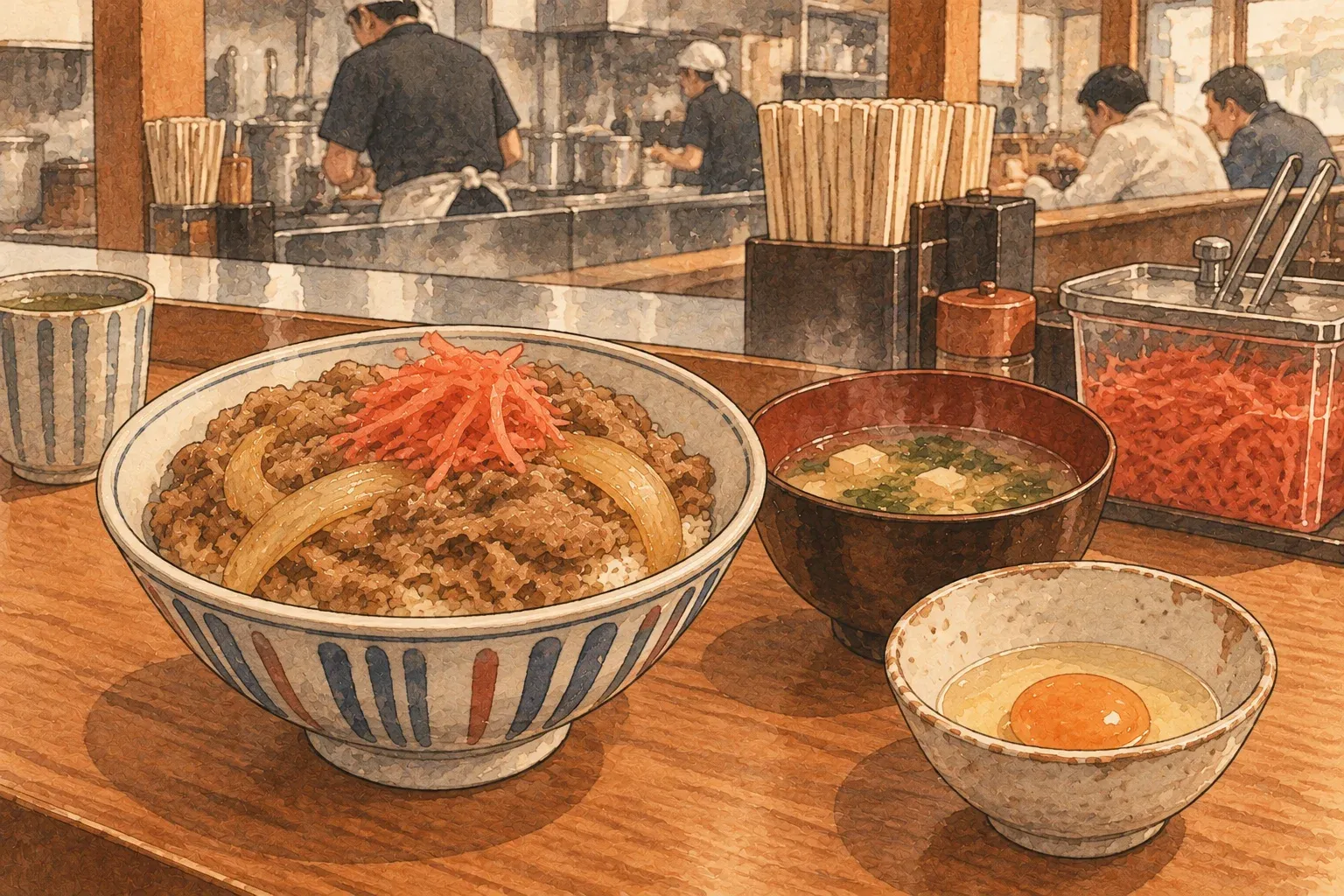
I have not been to every place in this guide. The figures below are taken from the sources listed at the end, with the date each one was published — not measured by me. Where I have been, the article says so.
The beef bowl is what the big Japanese chains sell for under ¥500. It has a longer history than its chain-shop image suggests. The oldest chain dates itself to 1899, at a fish market, and the dish has been shaped ever since by the people who ate it there: fast, cheap, and with their own words for how they wanted it.
For rice bowls generally, start from the donburi overview.
Where it came from
Nihonbashi, 1899. Yoshinoya’s history says Matsuda Eikichi, from Osaka, came to Tokyo and opened a shop at Nihonbashi, then home to one of the biggest fish markets in the city, and that his beef bowl, suited to the tastes of the people working there, became popular. The shop’s name comes from the cherry blossoms of Yoshino, in Nara, which he loved.
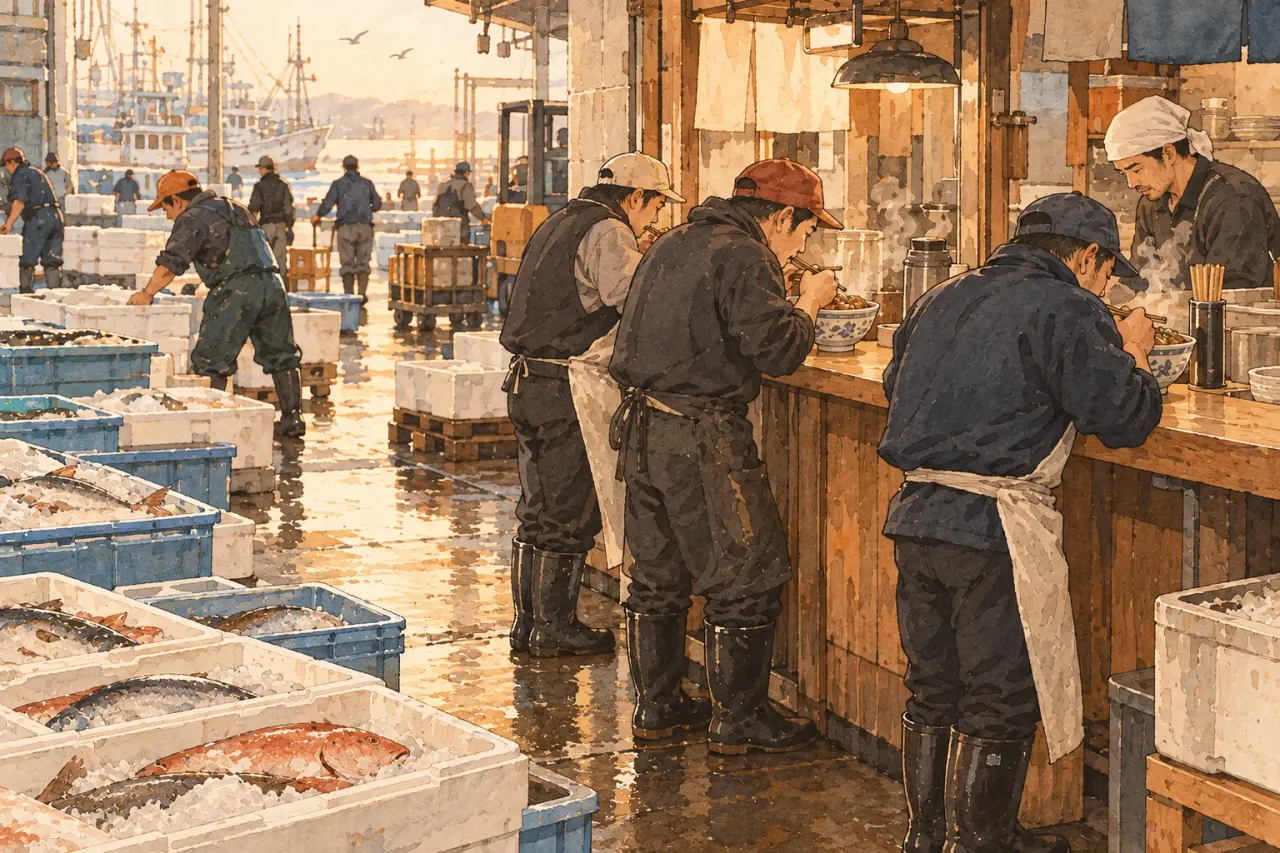
Following the market. The 1923 Great Kantō Earthquake burned the shop and damaged the market. The fish market moved from Nihonbashi to Tsukiji, and Yoshinoya reopened at Tsukiji in 1926. When the Tsukiji central wholesale market opened in 1935, the market workers asked it to move inside, and it did. It burned again in the 1945 air raids, reopened as a stall after the war, and in 1947, with Matsuda Mizuho joining the management, reopened inside Tsukiji market. The motto became “fast and tasty”, and the menu was cut to the beef bowl alone.
Becoming a chain. Yoshinoya became a company in 1958 and opened its second shop, in Shinbashi, in 1968. It went into corporate rehabilitation in 1980, had its plan approved in 1983, and listed on the Tokyo Stock Exchange’s first section in 2000.
The BSE years. In December 2003 a cow suspected of BSE was found in the United States, and Yoshinoya could no longer buy American beef. It shortened its hours and stopped serving the large size, and in February 2004 stopped selling the beef bowl altogether, switching to pork bowls and beef curry bowls. It held a “beef bowl revival festival” in September 2006 when US imports resumed, and went back to 24-hour beef bowl sales in March 2008.
The three chains
Each started from a different place.
- Yoshinoya — a fish-market eatery, 1899, the menu narrowed to one dish.
- Sukiya — part of Zenshō, founded in June 1982 in Tsurumi, Yokohama; the first Sukiya, inside a building, opened that November in front of Namamugi station, and the first free-standing one in Mito in 1987. Sukiya says all its shops are company-run, it has table seating, and it serves the beef bowl 365 days a year.
- Matsuya — opened as a Chinese restaurant in Nerima, Tokyo, in June 1966, and in July 1968 became a gyūmeshi and grilled-meat set-meal shop at Ekoda. It reached 1,000 shops in 2013 and introduced its “premium gyūmeshi” in 2014. Its own word is gyūmeshi, “beef rice”, not gyūdon.
How they differ in taste is not something an official source records, so it is not judged here.
What it costs
Gyudon (beef bowl) 牛丼
- Survey
- ¥489 (≈ €3 / $3)牛丼 外食 1杯 · Aug 2026 · 特別区部
- Chains
- ¥460–¥498Beef bowl, regular size · Matsuya, Sukiya, Yoshinoya · tax incl. · checked 2026-10-05
Gyudon chain, regular 牛丼チェーン(並)
- Chains
- ¥460–¥498Beef bowl, regular size · Matsuya, Sukiya, Yoshinoya · tax incl. · checked 2026-10-05
- Our guide figure
- ¥490 (≈ €3 / $3)The one case on this page where the survey figure and the street agree almost exactly · Oct 2026
The figures above are kept on the price reference page and update there. Checked on the date at the top of this page, tax included: Yoshinoya’s regular bowl ¥498; Sukiya’s mini ¥420, regular ¥480, tokumori ¥880 and mega ¥1,060. Matsuya posted a price-revision notice on 9 October 2026; I have not read it, so no Matsuya price is given here, and the reference figure above may be older than that notice.
How to order it
- Choose a size by name. Sukiya’s run from mini to mega. Yoshinoya’s regular (namimori) is the reference.
- Say what you want more of. Yoshinoya lists negi-daku (extra onion) and niku-daku (extra meat) as menu items. Tsuyu-daku, extra sauce, began, the company says, as a request from Tsukiji regulars — the trade customers who knew exactly how they liked it.
- Add a set. Sukiya invites you to add a set to the bowl; what is in it varies.
Not all of Japan’s rice bowls are this
- Katsudon — a pork cutlet, usually set with egg, except in towns where it means sauce. See the katsudon page.
- Butadon — Obihiro’s grilled pork bowl, devised, the farm ministry says, because eel was too dear.
Eating it at the source, and getting there
Tsukiji’s wholesale market moved to Toyosu in 2018, and Toyosu has 38 restaurants inside that visitors may use. Check fares and journey times with the operator before you travel.
The beef bowl away from the market
The beef bowl’s “home” is a fish market that no longer exists, and the dish is now national. What changes is the chain and the size, not the town: Yoshinoya’s regular bowl and Sukiya’s are within ¥20 of each other, Matsuya calls it something else, and each publishes its own size ladder.
What people get wrong
- “Gyūdon is a modern fast-food invention.” Yoshinoya dates itself to 1899.
- “All beef-bowl chains are the same.” They began as a market eatery, a 1980s chain and a Chinese restaurant, and they name and size the bowl differently.
- “Tsuyu-daku is slang.” At Yoshinoya it is a request with a documented history; extra onion and extra meat are actual menu items.
- “The beef bowl was always available.” Yoshinoya stopped selling it from February 2004 to September 2006.
Questions people ask
Where did the beef bowl come from?
The best-documented history is Yoshinoya's. It says Matsuda Eikichi, from Osaka, opened a shop at the Nihonbashi fish market in Tokyo in 1899, and that the beef bowl became popular with the market's workers. The shop followed the market to Tsukiji after the 1923 earthquake.
What is tsuyu-daku?
Extra sauce on the rice. Yoshinoya's history says the request came from its regulars at the Tsukiji fish market. It also lists negi-daku (extra onion) and niku-daku (extra meat) as separate menu items.
Why does Matsuya say gyūmeshi?
That is the name it uses. Matsuya opened as a Chinese restaurant in 1966 and became a gyūmeshi and grilled-meat set-meal shop in 1968, and its own history uses gyūmeshi rather than gyūdon.
Sources
Prices are in Japanese yen. Conversions are approximate, at ¥177.30 to the euro and ¥158.23 to the US dollar as of 20 Oct 2026. Rates come from the European Central Bank, which publishes on working days only. Prices checked Oct 2026. What food costs in Japan →