
Restaurant reservations in Japan: how to book, why no-shows matter, and what the law says about cancellation fees
I have not been to every place in this guide. The figures below are taken from the sources listed at the end, with the date each one was published — not measured by me. Where I have been, the article says so.
Booking a table in Japan is mostly straightforward: many restaurants take bookings online, some only by phone, and some not at all. What surprises some visitors is how seriously a booking is taken. The official sources describe it as a promise — the restaurant holds the seat and, for a set meal, buys and prepares the food — and Japanese law has a specific way of deciding how much a restaurant may charge when that promise is broken. This column covers how to book, why no-shows matter, and what the law says about cancellation fees.
How to book
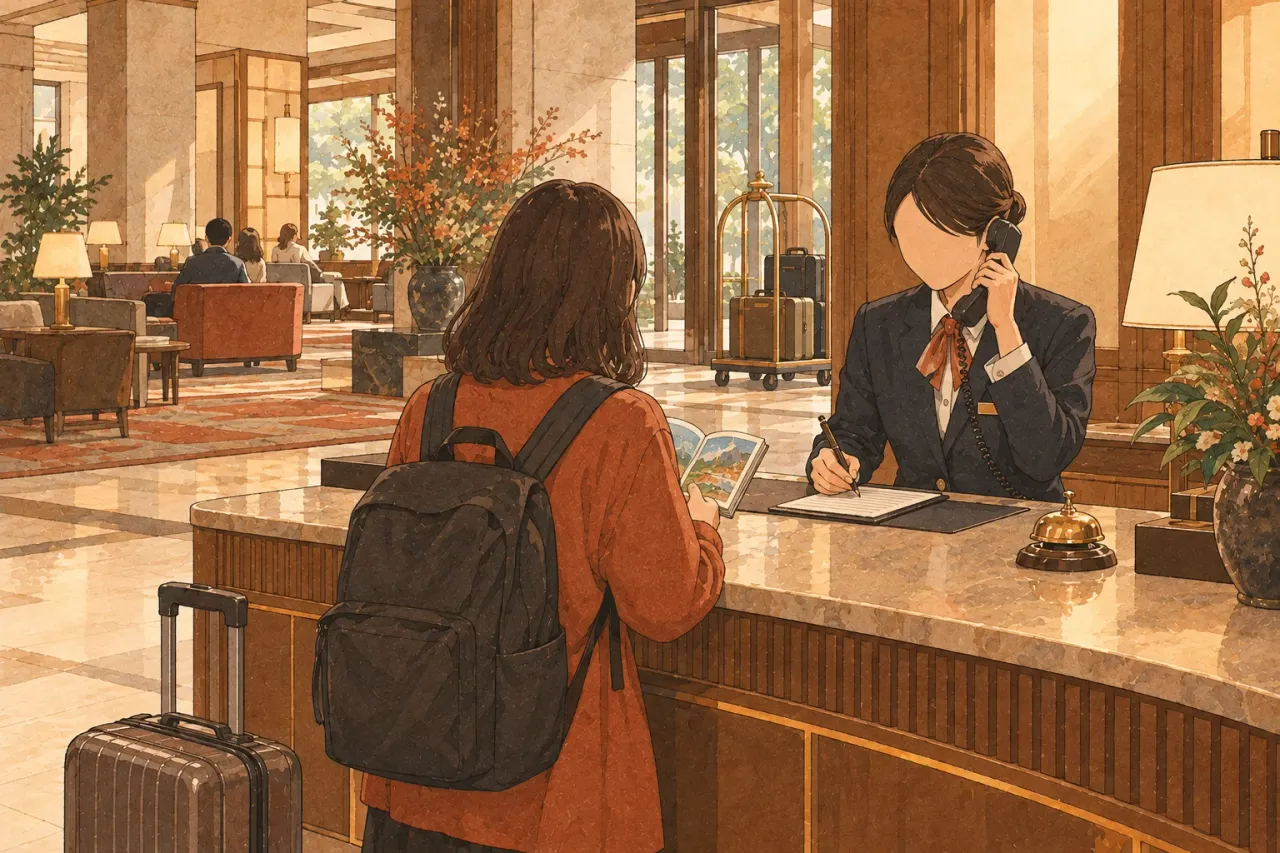
JNTO’s responsible-travel guide on reservations says many restaurants need a booking, especially at popular places in the centre of major tourist areas. Many can be booked online; some take bookings only by phone. If you are not comfortable phoning in Japanese, it says, a hotel concierge or a travel agency can make the call for you.
Places without bookings work differently. Fast food, family restaurants and ramen shops usually serve first come, first served, and some have a sheet at the entrance for your name, the number in your party and your seating preference. The column on queues covers that side.
Booking sites. Tokyo’s official dining site lists booking sites alphabetically: byFood, EAT TOKYO, OMAKASE Japan, Rakuten GURUNAVI, SAVOR JAPAN, Tabelog, TableCheck and Tripadvisor, with separate lists for vegan and halal options. The list does not explain their cancellation rules.
Set-menu restaurants. JNTO’s kaiseki guide marks some of its featured restaurants as booking recommended and some as booking required, and tells readers to check each restaurant’s official site for current information.
The conditions that come with a booking
JNTO’s reservations page lists conditions you may meet. Not every restaurant has them:
- A deposit or card details. Some restaurants ask for one to secure the booking. For a no-show or a last-minute cancellation, the deposit may be kept or a fee charged.
- Reconfirming. Some online booking services ask you to reconfirm 24 to 48 hours ahead.
- Being late. Arriving late can lose you the table or affect the meal. Set-menu restaurants may time their dishes, sometimes serving everyone at once. If you will be late, phone, or message the restaurant on social media if phoning is hard.
- Time limits. Some restaurants limit a table to about two hours, so check before booking if you want to stay longer.
The page notes that this is general guidance, not a guarantee, and that policies change; check each restaurant’s official site.
Tokyo’s dining site gives similar advice: book ahead at popular restaurants (unless they do not take bookings), cancel through the restaurant’s website or by phone, check the cancellation policy and fees beforehand, especially for a large group, and contact the restaurant as early as you can if you will be late. Not getting in touch, it says, leads to trouble.
Why a booking is treated as a promise
Japan’s consumer hotline for visitors, run by the National Consumer Affairs Center, explains it in a FAQ. In Japan, a booking is an undertaking by the restaurant to keep your seat, and for a set meal the preparation may start the day before. So if you cancel without telling the restaurant, you may be liable for its losses. It advises checking the free cancellation deadline and the fee on the booking site or by phone.
JNTO gives a further reason to cancel early: smaller restaurants in particular buy ingredients according to their bookings, so early notice cuts waste.
What no-shows cost
A 2018 report on restaurant no-shows, compiled for the economy ministry (METI) as a commissioned study, put the damage at an estimated ¥200 billion a year. METI’s online journal, in December 2019, described the figure as what is commonly said. I could not open the report itself, and I found no official update since 2018, so that is the only figure here.
The journal describes how the loss arises:
- Set meals. The food has been prepared for the number booked, so it is thrown away on the day — food waste plus disposal costs.
- Seat-only bookings. With no word from the customer, the restaurant cannot give the table to someone else and loses income it could have had. The journal says a single no-show has driven some restaurants to close.
How it comes back to customers. The same article says some restaurants accept only set-meal bookings because seat-only bookings have higher no-show rates, and that some seem to set higher prices to cover no-show losses. It asks people who hold several bookings across dates or restaurants to remember to cancel the ones they do not use.
An older note for restaurants. A 2008 tourism manual for businesses serving foreign guests advised that, for phone bookings from overseas, restaurants treat the booking as provisional, ask the guest to call again on arrival in Japan, and cancel it if they do not, and also take reliable contact details in case a cancellation fee is charged. It gives the example of a late guest turned away at a busy time, which led to a complaint because reconfirmation and the cancellation fee had not been agreed. The manual is from 2008; I do not know how many restaurants follow it now.
Cancellation fees and the law
The rule. Under Article 9(1) of the Consumer Contract Act, any agreed cancellation fee or penalty is void to the extent that it exceeds the “average loss” the business would incur from cancelling that kind of contract. The Consumer Affairs Agency’s commentary says this average is worked out from the business’s own many contracts of the same type — and states that it does not mean the industry standard. It is judged separately by category, such as the reason for and timing of the cancellation.
Explaining the fee. Under Article 9(2), if a customer asks, the business must make an effort to explain the outline of how the fee was calculated. It is a duty to try, not an absolute obligation.
Timing changes the answer. The agency’s example is a wedding venue, not a restaurant: 80% of the price for a cancellation a year or more ahead would be thought to exceed the average loss, while 80% the day before usually would not.
One court case. The economy ministry’s guidelines on e-commerce (February 2025 edition) cite a Tokyo District Court ruling of 25 March 2002 on a restaurant booking. The court held an agreed cancellation fee above the price of the meal partly void and limited the penalty to 30% of the meal price. The guidelines present the ministry’s view of how current law may be interpreted, and the 30% was that court’s decision on the facts of that case. It is not a general rule that restaurant fees are capped at 30%. I found no figure from the Consumer Affairs Agency for restaurant cancellation fees in particular.
What people think of fees. A survey commissioned by the Consumer Affairs Agency (online, July 2023; one group of 2,000 adults who had cancelled within a fee period in the past year, another of 5,000 answering hypothetical cases) found that people unhappy about paying a fee most often said it was too high or almost nothing was refunded, or that it was not explained or was unclear. People who were not unhappy said they had known about the fee or been told, or that the amount was reasonable. The survey covered travel, transport, restaurant bookings and other fields together; I could not read the restaurant-only figures, which are in images.
If there is a dispute
The consumer hotline for visitors takes enquiries in English, Chinese, Korean, Thai, Vietnamese, French and Japanese. It advises you on negotiating yourself; it has no power to compel or direct a business.
What people get wrong
- “Free to cancel unless they say otherwise.” Check the cancellation deadline and fee when you book.
- “A no-show only costs the restaurant one table.” For a set meal, the food is already prepared.
- “Any fee written in the terms is enforceable.” The part above the business’s average loss is void.
- “Restaurants can charge 30% at most.” That was one court case, not a rule.
- “There are exact national no-show figures for this year.” The only official estimate I found is from 2018.
Questions people ask
Do I need to book restaurants in Japan?
Often, especially at popular places in the centre of major destinations, JNTO says. Fast food, family restaurants and ramen shops usually serve first come, first served. Some restaurants do not take bookings at all.
What if a restaurant only takes phone bookings?
JNTO says that if you are not comfortable phoning in Japanese, a hotel concierge or travel agency can make the call for you.
Can a restaurant charge me if I cancel or do not show up?
It can. Some restaurants take a deposit or card details, and JNTO says these may be kept or charged for a no-show or late cancellation. Japan’s consumer hotline for visitors says failing to cancel can make you liable for the restaurant’s losses. Check the free cancellation deadline and fee when you book.
Is there a legal limit on cancellation fees?
Under the Consumer Contract Act, the part of a fee that exceeds the business’s average loss from that kind of cancellation is void. There is no fixed percentage for restaurants. One 2002 Tokyo court ruling capped a fee at 30% of the meal price, but that was one case.
Sources
- JNTO「Get Ahead of the Crowd: Making Reservations」
- GO TOKYO グルメ「Tips for Enjoying Dining Out in Comfort」
- GO TOKYO グルメ 予約サイト一覧
- JNTO「Japanese Kaiseki Cuisine」
- 国民生活センター 訪日観光客消費者ホットライン FAQ(レストランのキャンセル料)
- 国民生活センター 訪日観光客消費者ホットライン 案内
- 経済産業省 METI Journal「無断キャンセルが引き起こす負のスパイラル」
- 消費者庁 消費者契約法 逐条解説 第9条
- 経済産業省「電子商取引及び情報財取引等に関する準則」
- 消費者庁 会議資料 有賀敦紀「キャンセル料に関する消費者の意識調査」
- 国土交通省「多様な食文化・食習慣を有する外国人客への対応マニュアル」
Prices are in Japanese yen. Conversions are approximate, at ¥177.30 to the euro and ¥158.23 to the US dollar as of 20 Oct 2026. Rates come from the European Central Bank, which publishes on working days only. Prices checked Oct 2026. What food costs in Japan →